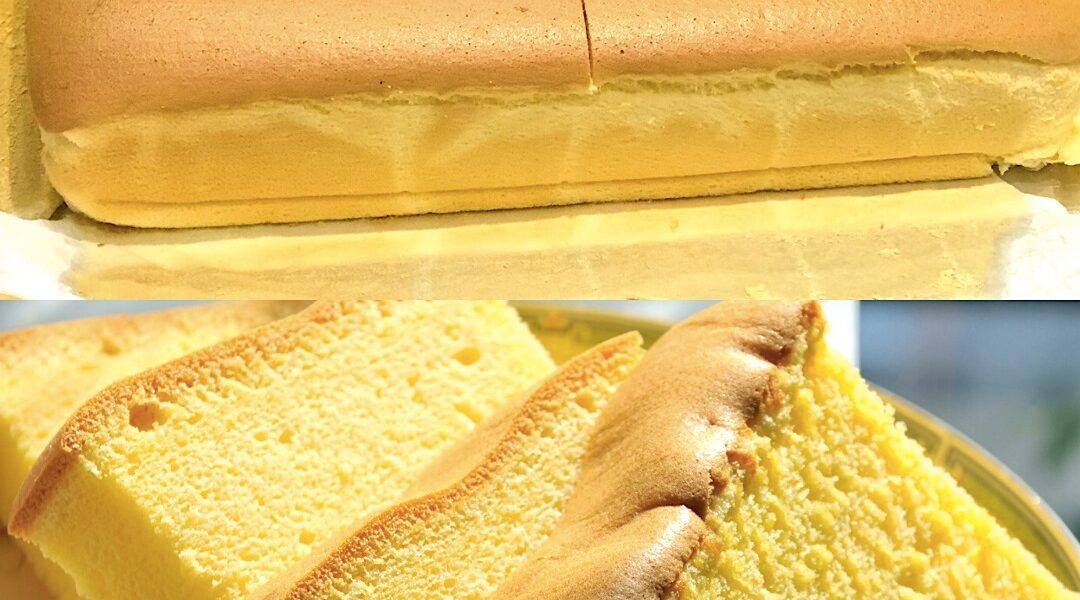
Rezept für Castilla-Kuchen

Zutaten
Mehl
90 g
Butter bei Zimmertemperatur
90 g
Milch
90 ml (2,9 oz)
Eigelb
5
Salz
eine Prise
Honig
2 Teelöffel
Vanilleextrakt
1 Teelöffel
Eiweiß
5
Zucker
90 g
Ein köstlicher Kuchen aus nur einer Handvoll Zutaten? Ja, das ist möglich! Dieser Castella-Kuchen ist ein einfacher japanischer Biskuitkuchen aus Mehl, Zucker, Eiern, Milch und Honig. Er ist auch unter seinem anderen Namen bekannt: Kasutera . Es ist ein superleichter und lockerer Kuchen, der mit Honig gesüßt wird .
Der Kuchen soll im 16. Jahrhundert von portugiesischen Kaufleuten in der Gegend von Nagasaki eingeführt worden sein. Tatsächlich bedeutet der vollständige portugiesische Name „Pao de Castela“ Brot aus Kastilien, weshalb er auch Castella-Kuchen heißt. Der traditionelle Castella-Kuchen besteht nur aus vier Zutaten (Mehl, Eier, Zucker und Honig), aber wir haben noch ein paar zusätzliche hinzugefügt.
Anders als bei einem normalen Biskuitkuchen , der zum Aufgehen Triebmittel wie Backpulver benötigt, werden für diesen Kuchen nur Eier verwendet, was ihn super zart und locker macht. Er ist federleicht und schmilzt fast im Mund . Dies ist der weichste Kuchen aller Zeiten und so einfach zu machen!

Was ist Castella-Kuchen?
Der Castella-Kuchen hat seinen Namen von dem leichten und lockeren Pao de Castela, den portugiesische Händler im 16. Jahrhundert in Nagasaki einführten. Aber dieser Kuchen hat etwas Besonderes.
Wenn Sie die Zutatenliste des Castella-Kuchens mit der eines normalen Kuchens vergleichen, werden Sie einen bemerkenswerten Unterschied feststellen. Normalerweise werden Kuchen mit Triebmitteln wie Backpulver, Natron und einigen säurehaltigen Zutaten zubereitet, damit sie aufgehen. Bei diesem Kuchen reichen die geschlagenen Eier aus, um ihn leicht und locker zu machen.
In Japan ist es so beliebt, dass man es in Geschäften im ganzen Land finden kann.
Zutaten aus Kastilien
Der traditionelle Castella-Kuchen besteht nur aus vier Zutaten:
Brotmehl – achten Sie darauf, Brotmehl mit einem hohen Proteinanteil zu verwenden
Eier – verwenden Sie keinen Ei-Ersatz, Eier sind in diesem Rezept wichtig, da sie für Auftrieb sorgen
Zucker – verleiht dem Kuchen Süße
Honig – verleiht einen leichten Honiggeschmack
Wie man Castella-Kuchen macht
Melt the butter and combine it with the honey, salt, and egg yolks, whisking it all together until thick and foamy. Gently fold in the whipped egg whites. Keep in as much air as possible (don’t beat again, just fold in the egg whites).
Pour the batter into a baking pan and cover with parchment paper. Bake in a water bath (or bain-marie) at the times and temperatures specified. Slice and serve!

Tips
Use high-protein flour. This means the flour will have enough gluten to allow the cake to rise properly.
To make sure the cake rises enough, you must beat the egg yolk mixture until thick and creamy.
Don’t skip the sifting process, otherwise, the cake won’t be as light and fluffy.
Once you add the flour, don’t overbeat the mixture.
This cake shouldn’t be made gluten-free as it needs gluten to rise.
If you see that it cracks on top, it could be that your oven temperature is too high (use an oven thermometer to make sure your oven is accurate). Leave the cake in the oven to cool, if it cools too fast, it might also start to crack.
Using vanilla extract can reduce the eggy flavor in the cake.
For a green matcha cake, add 1 ½ tbsp high-quality matcha green tea powder to the egg yolk mixture and stir to combine.
This recipe is different from a Taiwanese Castella Cake that is more like a souffle and is a bit more jiggly.
How To Serve Castella Cake
Serve the cake with your favorite fruit preserves and ice cream.
How To Store Castella
Store Castelle Cake in the fridge (in an airtight container) for up to 2 days. You can also freeze them. Wrap individual slices in plastic wrap and store in the freezer for up to 1 month.
More Recipes You’ll Like
Paradise sponge cake bars
Victoria sponge cake
Chocolate Victoria sponge cake
Instructions

Melt butter with milk together, add honey into the mixture.

Whisk sifted flour into a large mixing bowl, together with a pinch of salt.

Add the egg yolks and whisk to combine.

Whip egg whites with sugar until stiff peaks form.

Fold whipped egg whites into the batter carefully, to keep in as much air as possible. Pour the batter into 20×20 cm pan, covered with parchment.

Place the pan over a bain-marie and bake at 150C/300F for 20 minutes, then lower the temperature to 140C/290F for 15 minutes and finally bake the last 20 minutes at 130C/270F.